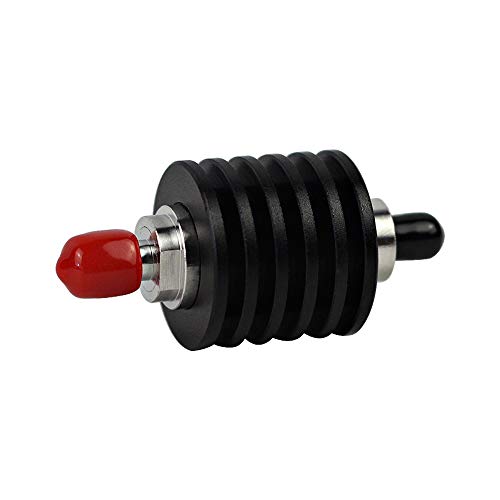
Attenuators are essential for protecting sensitive equipment and optimizing signal strength across RF, audio, and test applications. Whether you need precise dB reduction for ham radio or volume control for studio gear, choosing the right unit matters. We evaluated build quality, frequency range, and connector compatibility to help you find the ideal solution for your specific technical requirements.
Updated This Week
10
products
Interactive Comparison
As an Amazon Associate we earn from qualifying purchases.
[Stepless Volume Control] – Cubilux 3.5mm Volume Control Knob allows you to fine-tune the audio (support both stereo or mono sound) volume of your speaker and earphones to your desired level, giving you complete control over your listening experience.
[Crystal Clean Sound] – The volume controller ensures lossless transmission of the audio signal, maintaining the original music quality without any static.
In-Line Attenuator reduces the level of any balanced microphone or line-level signal by 15, 20, or 25 dB
Specially suited to reducing the level of a high-output microphone to prevent it from overloading the microphone input of a mixer or recorder in applications with high sound pressure levels.
[Line Out to MIC In Attenuator Cable] – Cubilux Stereo Attenuator Cable decreases line level output signal to match with MIC level input for recording without noise or distortion. Please note: This cable is NOT for transmitting microphone output signal to line-in jack.
[Stepless Roller Control] – The Attenuator Cable offers an in-line wheel control that lets you adjust signal attenuation at will (from 0dB to -15dB, -25dB, -35dB or even mute) for ideal recording level.
This curated list balances performance, durability, and price across RF, audio, and test domains. By focusing on connector integrity and accurate attenuation values, we’ve identified the most reliable tools for your technical projects.
Market Overview: attenuators
AI
The market offers specialized units for distinct needs, from high-power RF handling to delicate audio line-level control. Trends show a demand for compact, multi-purpose kits that offer flexibility for hobbyists and professionals alike.
Buying Guide: attenuators
AI
Identify your signal type (RF vs. audio) and required attenuation level. Check connector compatibility and power handling ratings to ensure your equipment remains safe and performs optimally during use.
Selection Criteria
We prioritized products with verified user ratings, clear technical specifications, and durable construction. Value for money and connector reliability were key factors in ranking these top performers.
Budget Advice
AI
Prices vary significantly by application. Basic audio or low-power RF units are affordable, while high-precision test equipment or professional audio gear commands a premium. Expect a wide range based on bandwidth and power ratings.
Conclusion: attenuators
AI
Selecting the correct attenuator depends on your specific signal type and power handling needs. Review our detailed comparisons above to identify the model that best fits your budget and technical specifications. Read on to find your perfect match.
Frequently Asked Questions
AI
RF attenuators manage high-frequency electromagnetic signals and are rated by frequency range and power handling (Watts). Audio attenuators control sound volume levels and are rated by impedance (Ohms) and connector type (e.g., 3.5mm, RCA).
Fixed attenuators provide a single, precise reduction value and are ideal for permanent installations. Variable attenuators allow you to adjust the signal strength on the fly, making them better for testing, debugging, or dynamic mixing environments.
Match the connector to your existing equipment. Common RF types include SMA, N-Type, and BNC. Audio connections typically use 3.5mm TRS, RCA, or XLR. Ensure the gender (male/female) matches your cable or device port.
We use Google Analytics to measure site usage. In the EEA, UK and Switzerland, analytics cookies require your consent; without consent, only cookieless signals are sent. Elsewhere, measurement is enabled by default and you can decline. Declining does not limit access to the site.
Learn more