Choosing the right marine navigation antenna is critical for safety and reliability on the water. Whether you need a compact solution for a small boat or a high-gain system for offshore voyages, signal clarity determines your position accuracy. We evaluated options based on connector compatibility, cable length, and build quality to help you find the best fit for your vessel.
Updated This Week
10
products
16-39€
Price Range
Interactive Comparison
As an Amazon Associate we earn from qualifying purchases.
Frequency: GPS 1575.42MHz ±3 MHz; LNA Gain: 28dB; Power Supply DC Voltage: 3V to 5V; Power Supply DC Current: 10mA Max; Feature: Magnetic Mounting, Adhesive Mount;
Foldable: The mushroom antennae features a foldable and bendable design, making it convenient for various applications. Accurate position and navigation are vital for activities such as vehicle, marine, drone and outdoor adventures.
Outstanding Signal Amplification: This antennae is equipped with remarkable signal amplification capabilities, enhancing the reception of weak GPS satellite signals and ensuring continuity and accuracy in locating.
Easy to install and use, plug and play, direct replace the old GPS antenna with TNC male connector and BNC Adapter for more device
Low-profile water resistant (IP65) housing with mounting hole at the bottom for post or pole mount, long cable (26ft / 8 meter) provides more flexible application, Comes with BNC connector and TNC adaptor
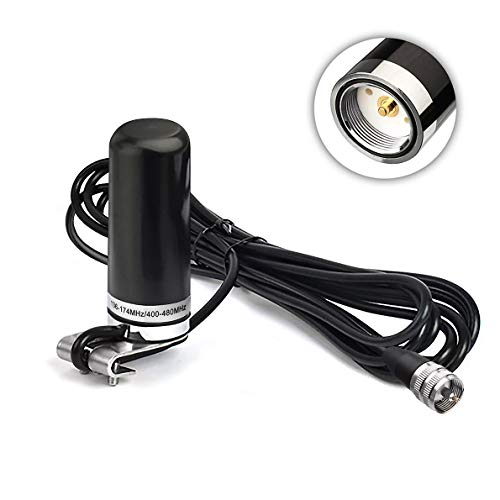
Improved Communication and Navigation: Connect AIS transponders and VHF radios to a single VHF antenna in the 136-174MHz frequency range for enhanced communication and navigation capabilities
and Waterproof Construction: The Antennas Power Splitter features a fully sealed and waterproof aluminum alloy casing. The galvanized copper columns provide resistance, ensuring long-lasting performance
Reliable marine navigation requires more than just a GPS unit. Our top picks balance signal strength, connector security, and weather resistance. Choose a model that fits your boat's specific mounting and connectivity needs.
Market Overview: marine navigation antennas
AI
The marine GPS antenna market favors robust, waterproof designs with flexible mounting options. There is a strong demand for multi-connector adapters and long-cable solutions to accommodate modern vessel layouts.
Buying Guide: marine navigation antennas
AI
Focus on connector type (TNC, BNC, SMA) and cable length. Ensure the antenna is waterproof and compatible with your specific GPS model. High-gain ceramic elements offer better performance in challenging marine environments.
Selection Criteria
We prioritized connector compatibility, cable durability, and user feedback. Products were selected based on real-world reliability, ease of installation, and value for money in the Canadian market.
Budget Advice
AI
Entry-level antennas start around CA$15. Mid-range options with better cables and connectors range from CA$25 to CA$45. Premium systems with extended cables and high-gain features can exceed CA$60.
Conclusion: marine navigation antennas
AI
Your safety at sea depends on reliable data. Review our full list to compare technical specs and prices. Select the antenna that matches your GPS receiver and marine environment. Read on to find the perfect navigation upgrade for your boat today.
Frequently Asked Questions
AI
The most common connectors are TNC, BNC, and SMA. TNC is standard for marine-grade equipment due to its secure locking mechanism. Always check your GPS receiver's port before purchasing to ensure compatibility.
Active antennas include a built-in amplifier to boost weak signals, which is ideal for larger vessels or areas with interference. Passive antennas are simpler but may struggle with signal strength over long cable runs.
Longer cables can introduce signal loss, especially for active antennas. Ensure the antenna has sufficient gain to compensate for cable attenuation. For runs over 15 feet, verify the antenna supports the length without degradation.
We use Google Analytics to measure site usage. In the EEA, UK and Switzerland, analytics cookies require your consent; without consent, only cookieless signals are sent. Elsewhere, measurement is enabled by default and you can decline. Declining does not limit access to the site.
Learn more